Audible vs Libby: The Ultimate Audio Showdown
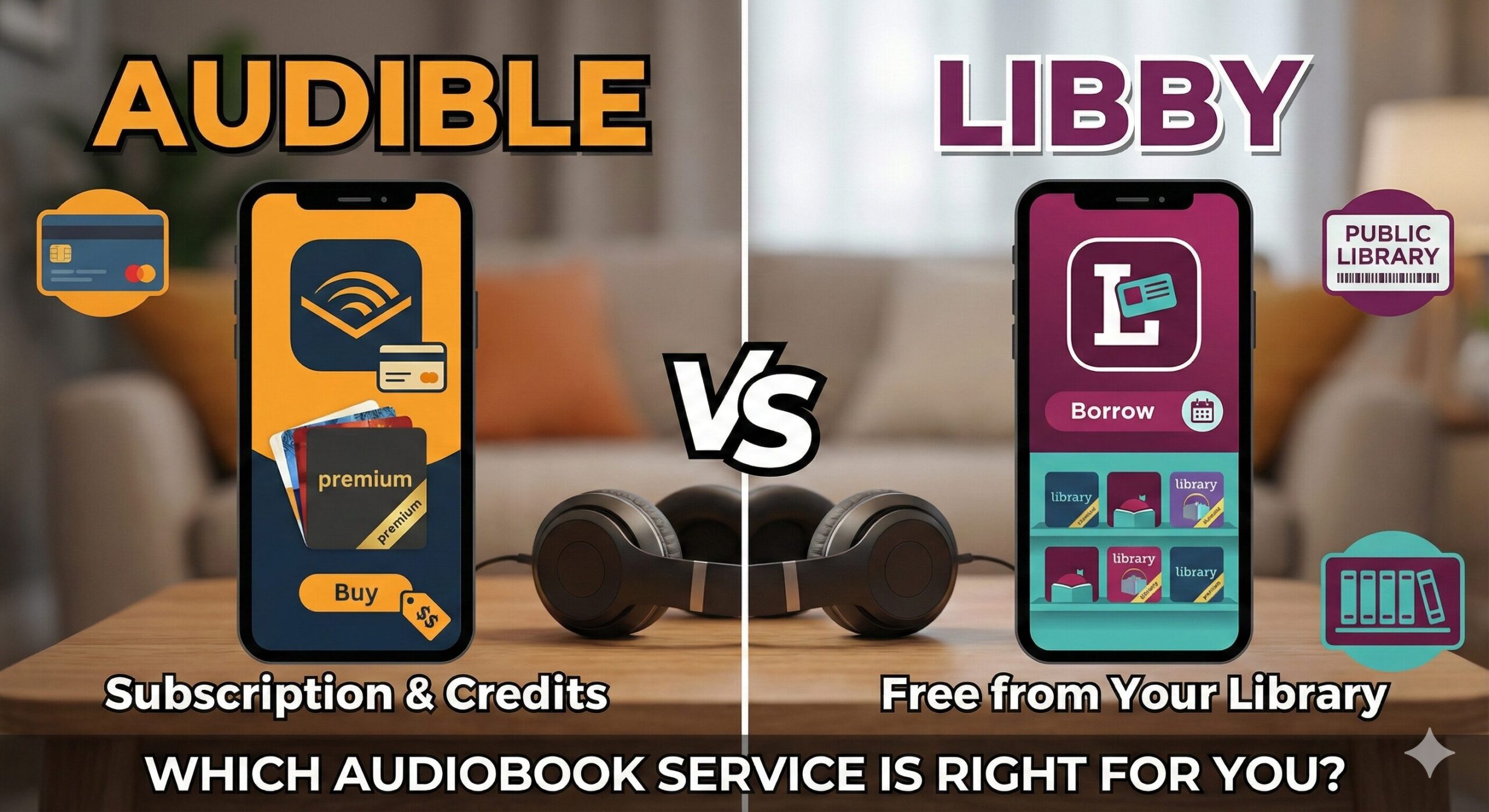
Which audiobook platform deserves your time (and money)? We break down the paid giant against the library hero.
The rise of digital storytelling has changed how we consume literature. No longer bound by physical pages, we can now “read” while driving, cooking, or working out. But as the popularity of audiobooks explodes, a massive debate has formed in the listening community: Audible vs Libby.
On one side, you have Audible, the Amazon-owned juggernaut that dominates the market with exclusive content, high-quality productions, and a model based on ownership. On the other side is Libby (by OverDrive), the beloved app that connects to your local library, offering audiobooks for the unbeatable price of zero dollars.
Is the premium experience of Audible worth the monthly subscription? Or is the patience required for Libby’s waitlists a fair trade-off for free content? Whether you are looking for heart-pounding thrillers or life-changing personal development books, the platform you choose defines your experience.
In this comprehensive guide, we will dissect every feature, cost, and quirk of both platforms to help you decide which one rules your headphones.
At a Glance: The Quick Comparison
Short on time? Here is the high-level breakdown of how these two heavyweights stack up against each other.
| Feature | Audible (Amazon) | Libby (Public Library) |
|---|---|---|
| Cost | $7.95 – $14.95+/month (Paid) | $0.00 (Free with Library Card) |
| Selection | 200,000+ (Largest in the world) | Limited to your library’s collection |
| Availability | Instant Access (No waiting) | Waitlists for popular titles |
| Ownership | You own the books forever | You borrow for 7-21 days |
| Exclusives | Audible Originals & Podcasts | None (Standard publications only) |
| Audio Quality | Standard & High (64kbps) | Variable (depends on file) |
Start Your Listening Journey Today

Don’t want to wait 6 months for the latest bestseller? Try Audible Premium Plus.
Check Audible Free TrialWhat is Audible? The Premium Experience
Audible is essentially the “Netflix” of spoken-word entertainment, but with a twist of ownership. Owned by Amazon, it is the world’s largest producer and retailer of audiobooks. When you ask how Audible works, the answer revolves around credits and catalogs.
The standard model (Premium Plus) gives you one credit per month, good for any title regardless of price. Once you use a credit, that book is yours forever—even if you cancel your subscription. Additionally, you get access to the “Plus Catalog,” a rotating selection of thousands of audiobooks, podcasts, and originals that you can stream unlimitedly.
The Pros of Audible
Why People Choose Audible
- Massive Library: If an audiobook exists, it is on Audible.
- No Waitlists: You want it, you get it instantly.
- Ownership: You build a permanent digital library.
- Audible Originals: Exclusive productions you can’t find elsewhere.
- Whispersync: Seamlessly switch between reading on Kindle and listening on Audible.
For listeners who devour specific genres like space opera or complex fantasy series, Audible ensures you never miss the next installment due to a library waitlist.
What is Libby? The Public Library Hero
Libby is the newer, sleeker app from OverDrive. It connects directly to your local public library’s digital catalog. To use it, all you need is a valid library card. It is a triumph of public service, democratizing access to knowledge and entertainment.
However, Libby is bound by the laws of digital lending. Libraries purchase “licenses” for digital books. If your library owns three digital copies of the latest Stephen King novel, only three people can listen to it at once. Everyone else must wait in line.
The Pros of Libby
Why People Choose Libby
- Completely Free: Zero subscription fees.
- Multiple Cards: You can add cards from different libraries to expand selection.
- User-Friendly Interface: One of the best-designed reading apps available.
- Support Libraries: Usage statistics help libraries get funding.
Libby is fantastic for browsing mystery audiobooks or discovering older classics where wait times are non-existent.
Round 1: Content Selection and Exclusives
Content is king. This is where the divide between the two platforms is most stark.
Audible’s Dominance
Audible has the largest library in the world. Period. They aggressively pursue exclusive rights. Many top authors now release “Audible Originals,” which are productions unavailable on Libby or any other platform. If you are looking for specific niche topics, such as finance and investment guides or specialized business audiobooks, Audible is more likely to have them in stock.
Libby’s Limitations
Libby’s content is entirely dependent on your specific library’s budget. If you live in a major city like New York or Los Angeles, your digital selection will be vast. If you live in a rural area with a small library budget, your selection may be sparse. While you can find plenty of best-selling fiction, obscure titles are harder to come by.
Round 2: Availability and The “Waitlist” Factor
This is the single biggest differentiator. Do you value your time or your money more?
The “Instant Gratification” of Audible
On Audible, you click “Buy,” and you are listening within seconds. This is crucial for book clubs, students, or anyone following a series. If you just finished book one of a cyberpunk saga, you can immediately start book two. This convenience is what you are paying for.
The “Patience Game” of Libby
Popular books on Libby often have wait times ranging from 2 weeks to 6 months. It is not uncommon to see a “12 weeks wait” on a new release. While this is fine for evergreen content like biographies or history books, it is frustrating for trending titles. However, Libby does have a “Skip the Line” feature for lucky borrowers, though it is rare.
Hate Waiting?

Pair your audiobooks with a new Kindle for the ultimate Whispersync experience.
Check Price on AmazonRound 3: User Interface and App Features
Both apps are highly rated, but they serve different masters.
Audible App Features
The Audible app is built for power users. It features:
- Car Mode: Simplified buttons for driving (great for road trips).
- Clips and Bookmarks: Save your favorite quotes easily.
- Listening Stats: Badges and listening time tracking.
- Dark Mode: Easy on the eyes at night.
- Variable Speed: From 0.5x to 3.5x.
Libby App Features
Libby is often praised for being more intuitive than Audible. Its design is colorful, friendly, and clean. It handles:
- Unified Shelf: See all your loans from different libraries in one place.
- Tags: Organize your “Want to Read” list effectively.
- Deep Customization: excellent sleep timer and speed controls.
- Cross-Device Sync: Syncs perfectly, just like Audible.
If you are trying to figure out how to stop auto-playing or manage sleep timers, both apps offer robust settings, but Libby’s interface feels slightly more modern.
Round 4: Ownership vs. Borrowing (DRM)
This is a philosophical difference. Do you want to build a library or just consume content?
With Audible, you own the license. If you cancel your membership, you still keep every book you purchased with a credit. This is vital for books you want to re-read, such as self-help books or reference materials. You can also share these books using Amazon Household—check out our guide on how to share Audible books with family.
With Libby, the file disappears from your device the moment your loan expires. If you haven’t finished the book, you have to get back in line (though Libby tries to save your place for when you borrow it again). You truly own nothing.
Round 5: Audio Quality and Data Usage
Audiophiles often ask about bitrates. Generally, Audible offers a slightly higher quality setting (High Quality) which provides cleaner sound, especially for productions with music or sound effects, like immersive audiobooks or full-cast dramas.
Libby’s quality is determined by the file provided by the publisher to the library system. It is usually standard MP3 quality, which is perfectly fine for voice but might lack the depth of Audible’s highest setting. If you are listening on mobile data, you might wonder how much data an audiobook uses; both apps allow you to download via Wi-Fi to save your data plan.
The Verdict: Pros and Cons Summary
Audible Pros & Cons
- Ownership of titles.
- No waiting (Instant access).
- Exclusive “Audible Originals”.
- Easy returns policy (Love it or exchange it).
- Monthly subscription cost.
- Credits can be expensive if you listen fast.
- Proprietary DRM format.
Libby Pros & Cons
- 100% Free.
- Supports local libraries.
- Great for trying new genres risk-free.
- Excellent app design.
- Long wait times for hits.
- Limited selection (Library dependent).
- Strict time limits (Return dates).
- No permanent library.
Which Platform is Right for You?
Choose Audible If:
- You listen to new releases the day they come out.
- You commute daily and need reliable entertainment without waitlists.
- You love niche genres like office romance or horror where library selection might be thin.
- You re-listen to books often.
- You want access to the Audible Plus Catalog.
Choose Libby If:
- You are on a budget.
- You are a casual listener who doesn’t mind waiting.
- You listen to older bestsellers or classics.
- You want to support your local community.
- You are exploring genres like teen audiobooks or children’s stories for a one-time listen.
The Pro Strategy: The Hybrid Approach
Most “power listeners” use both. They use Libby for everything they can find for free, and they save their Audible credits for:
1. Books with massive waitlists on Libby.
2. Audible Exclusives.
3. Massive epics (40+ hours) that are hard to finish in a 14-day library loan.
If you find yourself accumulating credits, you can even gift an audiobook to a friend to get them hooked.
Frequently Asked Questions (FAQ)
Can I use Audible and Libby on the same device?
Absolutely. Both apps are available on iOS and Android. You can have them installed side-by-side. You can even switch between them depending on what book you are listening to.
Is Audible free with Amazon Prime?
No, Audible is a separate membership. However, Prime members often get a “premium” free trial (like 2 free credits instead of 1) when they sign up. Occasionally, Amazon offers a selection of free audiobooks to Prime members via “Prime Reading,” but it is not the full Audible experience.
Can I listen to Libby books on my Kindle?
Yes! In the US, you can send Libby books to your Kindle device. However, this is primarily for the eBook version. For audiobooks, you usually have to listen via the Libby app or a web browser, as Kindle e-readers (E-ink) generally have limited audio support compared to phones.
Are audiobooks as good as reading?
This is a common debate. Research generally suggests that comprehension is very similar. For a deep dive, check out our article: Are audiobooks as effective as reading?
What happens if I cancel Audible?
If you cancel, you lose your remaining credits (so spend them first!), but you keep every book you have already purchased. You also lose access to the Plus Catalog. For a step-by-step guide, see how to cancel Audible membership.
Can I listen to these apps while falling asleep?
Yes, both apps feature sleep timers. If you are looking for content specifically designed for rest, check out our list of the best audiobooks to fall asleep to.
Final Verdict
The battle of Audible vs Libby doesn’t really have a loser. It’s a choice between convenience and cost.
If you can afford the monthly fee, Audible offers a superior, frictionless experience with an unmatched library. It is the best choice for serious bibliophiles who want to curate a permanent collection of audiobook recommendations.
However, Libby is a masterpiece of public access. If you are patient and flexible with what you listen to, it provides incredible value without costing a dime. It proves that great storytelling should be accessible to everyone.
Ultimately, the best app is the one that gets you listening. Whether you are soothing your nerves with audiobooks for anxiety or traveling through time with sci-fi classics, just hit play.
Ready to Listen?
Experience the premium features of Audible today. Sign up now and get your first book free.
Get 30-Day Free Audible Trial